
How Mobile Home Moving Works in Arizona
Most people call us having never done this before. Here’s exactly what happens, in order, so there are no surprises.
Get Your Free Service Quote
Tell us what you need, where the home is, and the best number to reach you. We respond within one business day.
Need a Quote For Mobile Home Transport? Start today…



Before you call: what to have ready
You don’t need all of this but the more you have, the faster we can give you a real number instead of a range.
What kind of home it is
Single wide, double wide, triple wide, park model or modular. If you don’t know, tell us the approximate width and we’ll figure it out.
Approximate size and year built
Share the approximate size and year built. The year matters more than people expect and helps us identify permit and transport requirements.
Where it is now
Send the full current address and tell us whether the home is in a park or on private land.
Where it’s going
Share the destination address if you have one. “Somewhere in Yavapai County” is fine to start if the final address is not settled.
Photos
Send photos from a few useful angles, including the home, hitch end, access road and destination site if you have it.
Condition
Describe the roof, floors and frame condition, and tell us whether the home has been sitting empty.
Whether you have the title
Let us know whether you have the title. If you don’t, say so—it’s common and usually solvable, but it can affect timing.
Your timeline
Share the date you are working toward, including any park deadline, lender requirement or closing date that is setting the schedule.
Your move, from first call to final setup
Six clear stages, one accountable Arizona mobile home moving team.
01
Step 1 — The first call
Tell us about the home, the site, and where it is going.
02
Step 2 — Site assessment
We inspect access, the pad, anchoring, and roadworthiness.
03
Step 3 — Written quote
You receive a clear written scope before work begins.
04
Step 4 — Permits & scheduling
We coordinate permits, utilities, escorts, and the move date.
05
Step 5 — Move day
Our crew prepares, transports, places, levels, and anchors the home.
06
Step 6 — After the move
Inspection, documentation, and follow-up complete the process.
Step 1 — The first call
Call 480-616-0537 or send the form. You’ll talk to someone who does this work, not a call center and not a broker.
We’ll ask about the home, the site and where it’s going. Five to ten minutes usually tells us whether this is a job we can do, roughly what it involves, and what we need to see next.
What you’ll get on this call: a straight answer about whether we can help, a rough sense of the range, and what happens next. What you won’t get: a firm price we haven’t earned the right to quote, or pressure to book anything.
If your home shouldn’t be moved, this is where we tell you — not after you’ve paid a deposit.

Step 2 — Site assessment
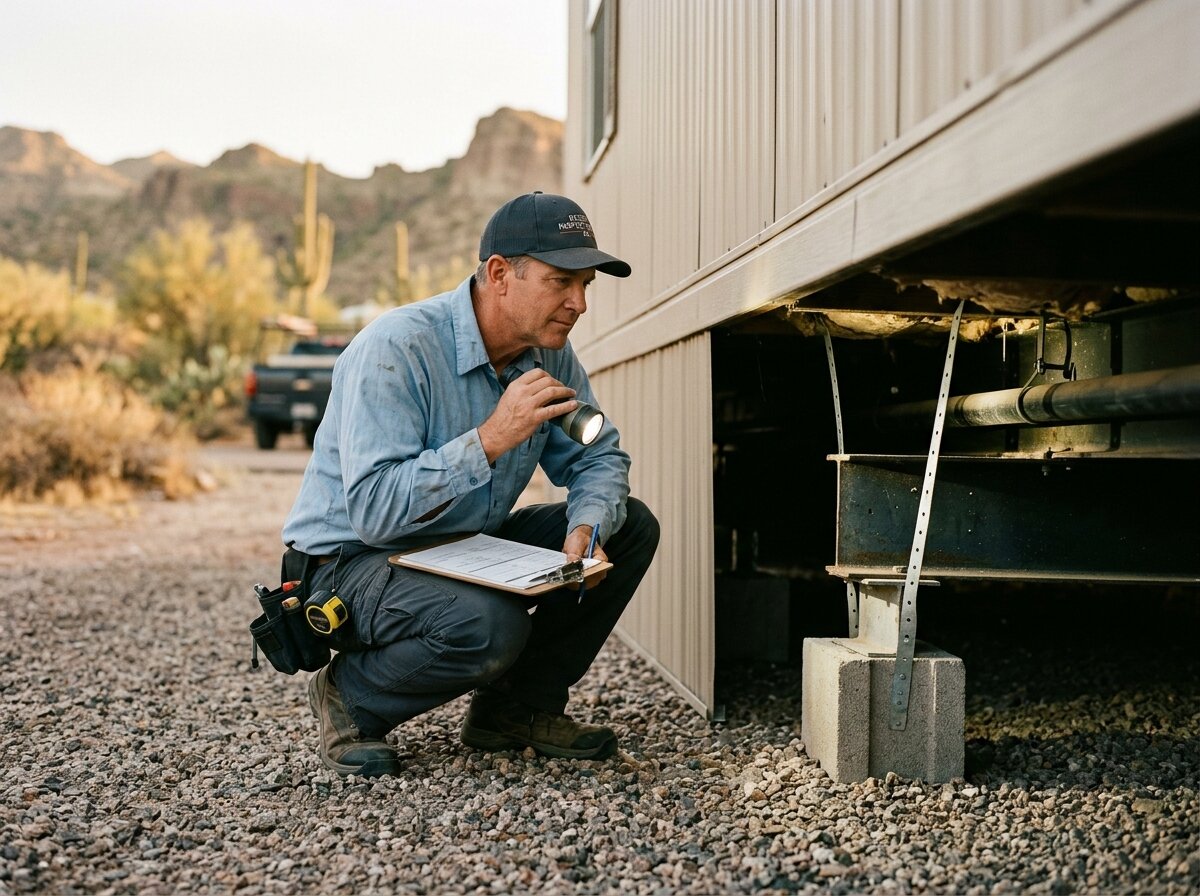
For most jobs we need to see the property, or at least good photos of it. Here’s what we’re looking at:
Access at the origin — road width, turning radius, gates, overhead power and phone lines, tree cover, neighboring homes, how tight the park is.
The pad and what’s under the home — blocking, piers, anchoring, skirting, whether the ground is firm or soft.
The home’s roadworthiness — frame, chassis, axles, tires, hitch. Older homes frequently need work here before they can legally roll.
Attachments — Arizona rooms, carports, decks, awnings, add-ons, A/C units. These come off, and some of them don’t go back on.
The destination — pad, setbacks, utilities, permits, and access. A lot of moves get complicated at the destination end, not the origin.
The route — clearances, bridges, weight limits, construction and restricted roads.
Step 3 — Your written quote
You get a written quote before anything starts. It spells out transport, permits and who pulls them, escort vehicles if the route requires them, disconnect and reconnect scope, setup work (blocking, leveling, tie downs, skirting), anything that has to be repaired before the home can move, and the timeline.
Our commitment: the written quote is the price. If something on site genuinely changes the scope — we open up the underside and find frame damage, or the destination isn’t what we were told — you hear about it before we do the work, not on the invoice.
Get other quotes too. You should. Just make sure you’re comparing the same scope — the cheap quote is usually the one that leaves out permits, escorts or setup.
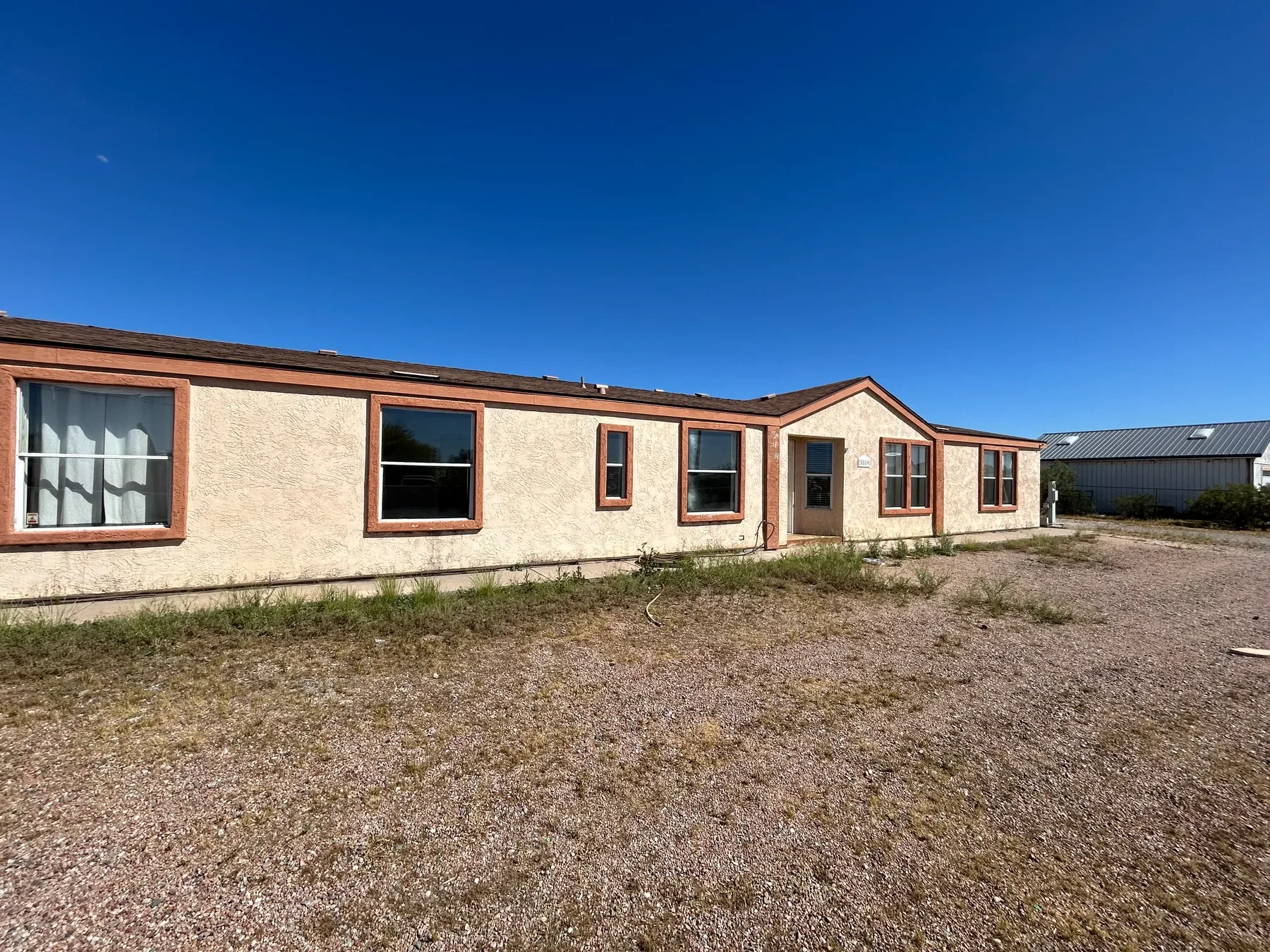
Step 4 — Permits, utilities and scheduling
This is the part that stops most people from doing it themselves, and it’s the part we handle.
ADOT oversize load permits — required based on width, height, length and route.
Escort and pilot vehicles — scheduled where the load or route requires them.
Route survey — confirming clearances and restrictions on the actual roads we’ll use.
Installation permit through the Arizona Department of Housing for setting the home at its destination, pulled by a licensed installer.
County and municipal permits where required, utility disconnects coordinated with the providers, and park paperwork on both ends.
Then we set a date. Weather, permit turnaround and escort availability all factor in, and we’ll tell you what’s driving the schedule.
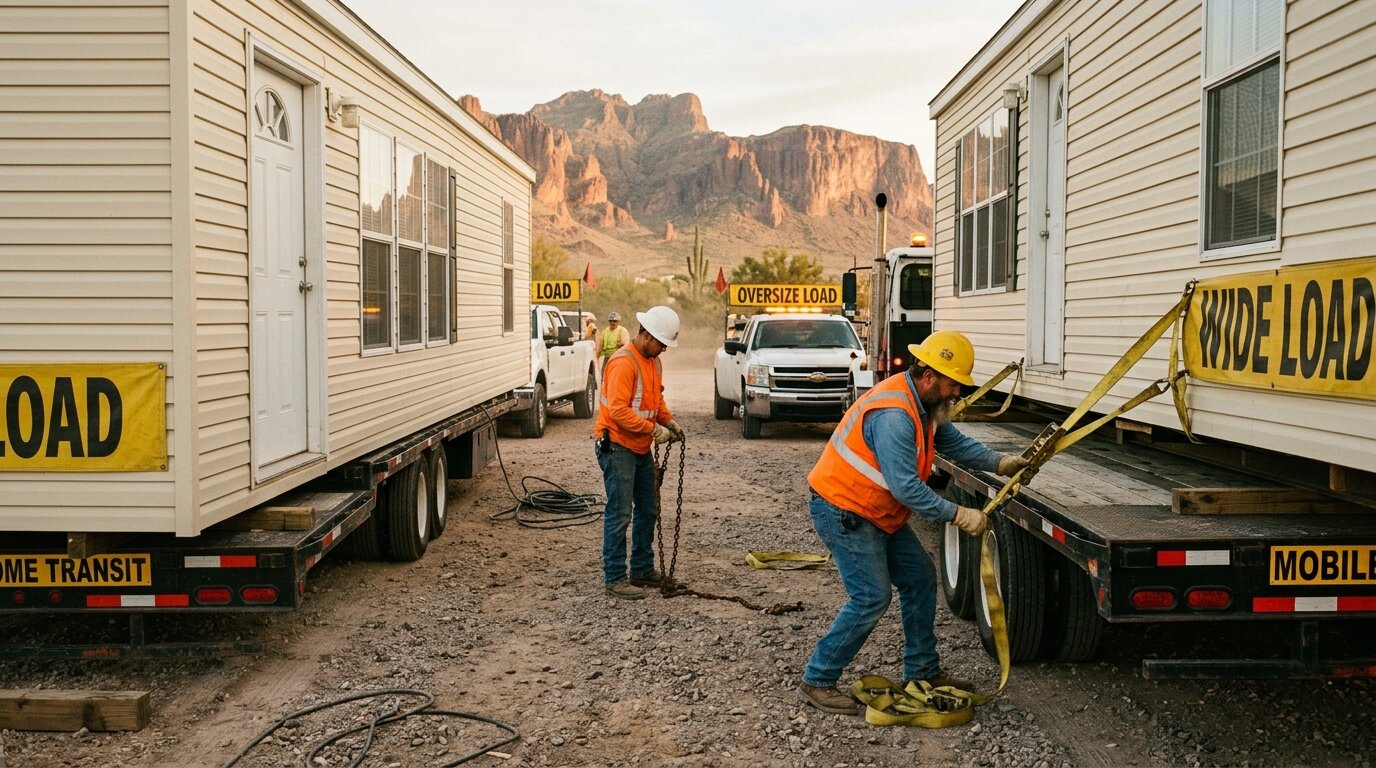
Step 5 — Move day
Here’s the actual sequence:
Prep — skirting removed, attachments detached, A/C and steps pulled, home disconnected from utilities.
Lift and block-out — home raised off its piers, axles and tires installed or inspected, hitch attached.
Load check — brakes, lights, tires, hitch, and a final walk of the exit route.
Transport — with escorts running ahead and behind where required.
Placement — home positioned on the prepared pad at the destination.
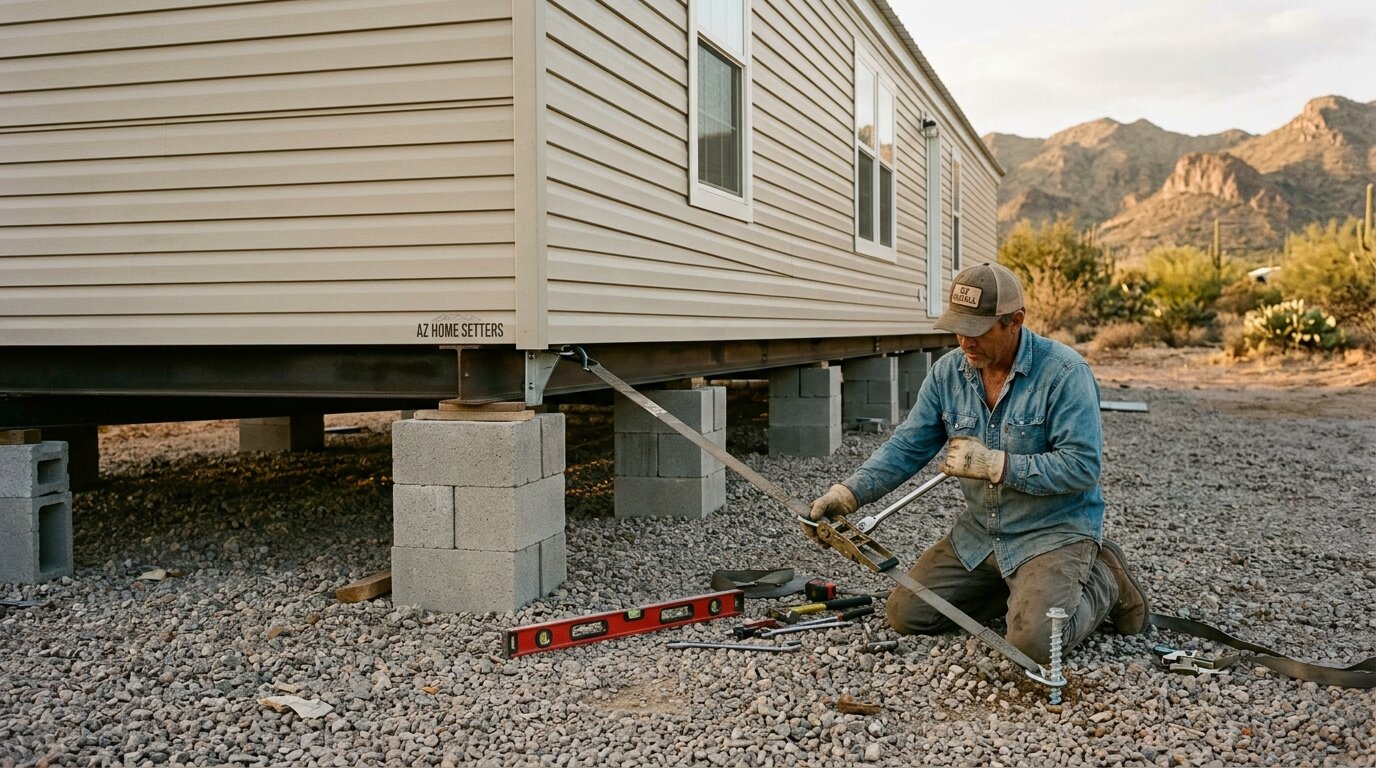
Set — blocking and piers installed, home leveled, and on multi-section homes the halves mated and the marriage line sealed.
Anchor — tie downs and anchoring completed to suit the site’s soil and applicable requirements.
Close in — skirting installed or reinstalled, access and ventilation set. Utilities reconnected. Site cleared and we walk it with you before we leave.
Most in-state transports happen in a single day. Setup can add a day or more depending on scope.
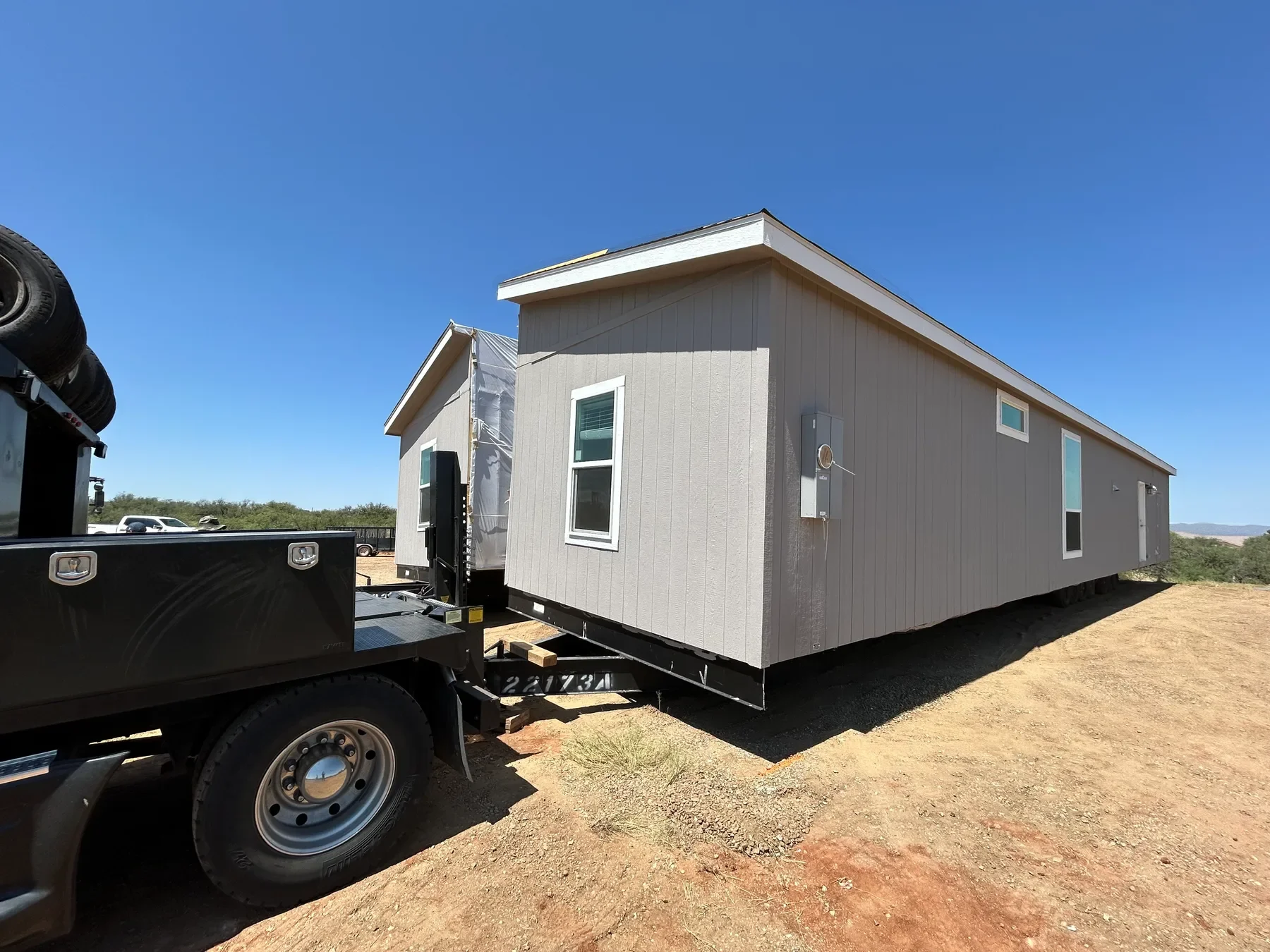
Step 6 — After the move
Installation inspection through ADOH is scheduled and cleared.
You get photo documentation of the anchoring and setup — useful for insurers and lenders.
We’re reachable if something needs adjustment. Homes settle, and a level check a few months out is normal and reasonable.
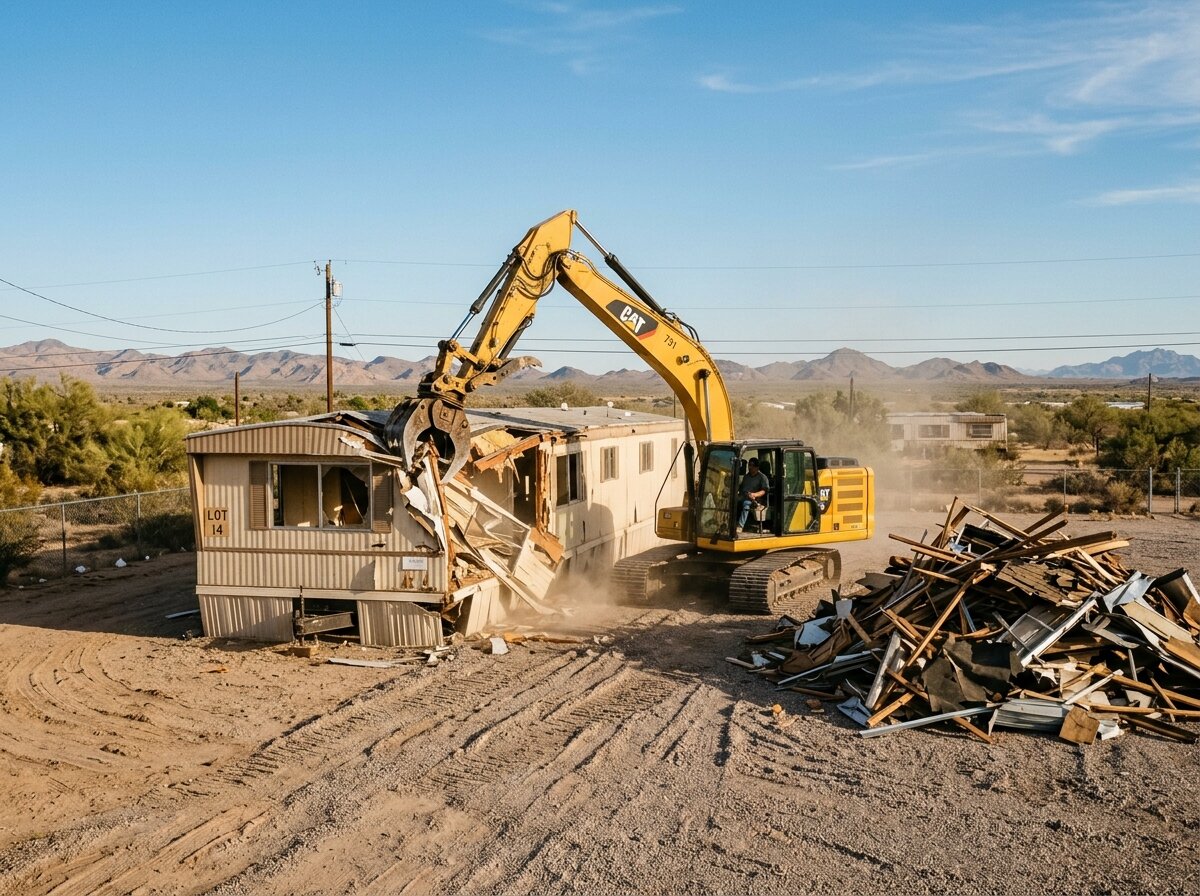
How it works for removal and demolition
Shorter process, same principles.
Send us the address and photos. Include anything you know about the title, the age and whether utilities are still connected.
We review the scope. Access, utilities, condition, permits, asbestos considerations and disposal.
You get a written price — and if the home has value, a cash offer alongside it, so you can choose.
We handle permits and utility disconnects, then demolish, haul and clear the site. Debris gone, nails and glass picked up, before-and-after photos.
Things that slow a move down
The most common issues are manageable when we identify them early.
Title problems
Missing, lost or abandoned titles take time to resolve. Start the title process early so it does not hold up permits or scheduling.
Pre-1976 homes
Homes built before June 15, 1976 pre-date the HUD code. Many parks won’t accept them, lenders often won’t finance them, insurance is difficult, and installation permits can be limited by the jurisdiction.
Destination not ready
The destination must be ready before move day. A permitted pad, septic or sewer, power and required setbacks may all need to be completed first.
Home isn’t roadworthy
The home must be safe enough to transport. Rotted frames, seized or missing axles, bad tires or a missing hitch are repairable, but they add time and cost.
Permits, weather and park approvals
Permits, weather and park approvals can shift the date. We confirm requirements at both the move-out and move-in ends and explain what is controlling the schedule.
Missing 504 tax clearance
A used Arizona mobile home needs county-issued 504 tax clearance. ADOT requires it before a used home originating in Arizona can be moved. Missing paperwork can stop the transport permit and scheduling.
Frequently asked questions
How far in advance should I call?
Earlier than you think. Permits, utility disconnects, escort scheduling and destination prep all take time, and title issues take the longest. Two to four weeks of lead time makes most moves comfortable; less than a week makes them hard.
What if you find something once you get under the home?
You hear about it before we do the work. We’ll show you photos, explain what it changes, and give you a revised number to approve or decline. No surprise line items.
Do I need to be there?
It helps but it isn’t required. We need someone authorized to make decisions reachable by phone, and access to both properties.
What if I decide not to move it after the assessment?
That’s fine, and it happens. Sometimes the assessment shows the move doesn’t pencil. We’ll price demolition or make you a cash offer instead — or you can walk away. No hard feelings and no pressure.
Ready to get started?
Request a no-obligation mobile home quote today. Tell us about the home, the property, and what you need. Dan answers the phone.